Financial data integration
Empowering client workflows by enabling data exchange between financial platforms
Empowering client workflows by enabling data exchange between financial platforms
YEAR
2025
TIMELINE
1.5 years
ROLE
Lead product designer
DELIVERABLES
Product design · Research insights · End-to-end workflows
TEAM
3 PMs, 2 designers, 1 researcher, 5 engineers, legal team
Lead product designer on a 1.5-year engagement to design and deliver the end-to-end FDX (Financial Data Exchange) integration experience for a new banking platform serving Innovation Economy clients - enabling seamless data exchange between the bank and external financial institutions for the first time.
Innovation Economy clients run their businesses on data; much of that data lives outside of the bank. The new platform being built had no way to support connections with external financial institutions, creating a critical gap in the client experience from day one.
"How might we enable Innovation Economy clients to seamlessly connect and manage their external financial data within a new platform, without adding friction to an already complex onboarding process?"
Before designing anything, we grounded the work in two foundational artifacts.
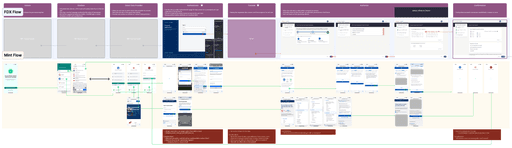
First, a comparative analysis of FDX and data-sharing flows across the industry to establish design benchmarks and determine scope.
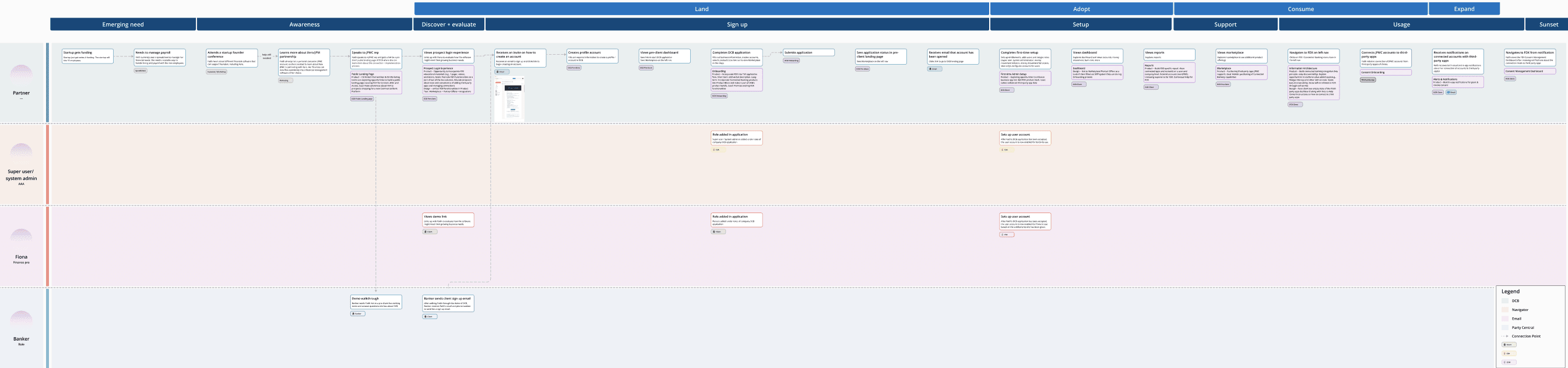
Then, a full client journey map that pinpointed the FDX integration as a pivotal step in the platform onboarding flow.
To pressure-test our early thinking, we conducted user interview sessions with 8 participants matching our target Innovation Economy persona.
Three core research insights shaped the design direction:
External data dependencies are non-negotiable
Clients relied on external institutions for core business workflows, making this integration a blocker, not a feature
Onboarding is high-stakes
First impressions on a new platform are fragile; any friction in connecting external accounts risked losing clients early
Visibility and control matter
Clients didn't just want to connect institutions; they needed confidence that they could see, manage, and revoke those connections at any time
With the journey mapped and user needs validated, we structured the work into two distinct problem spaces:
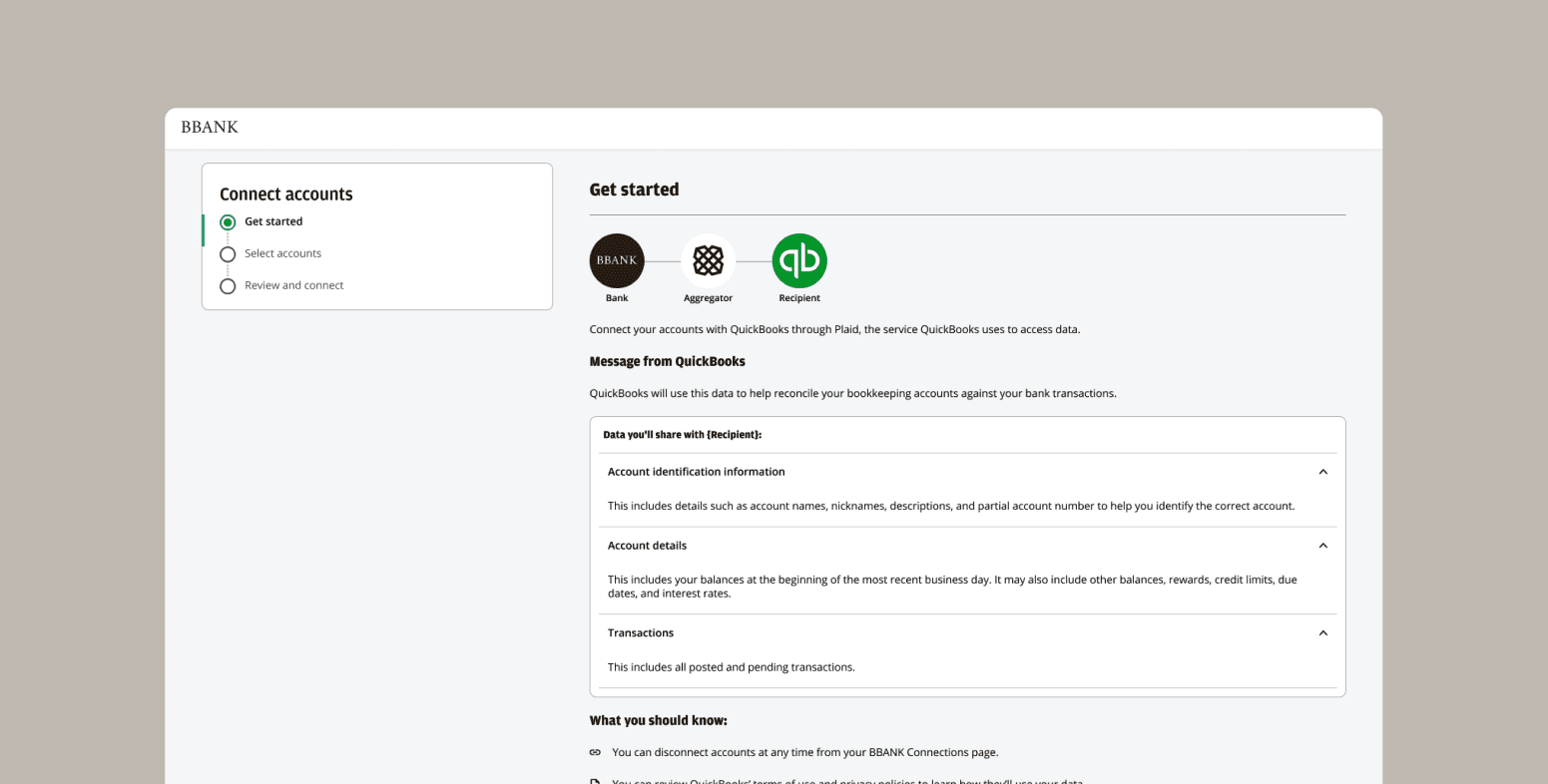
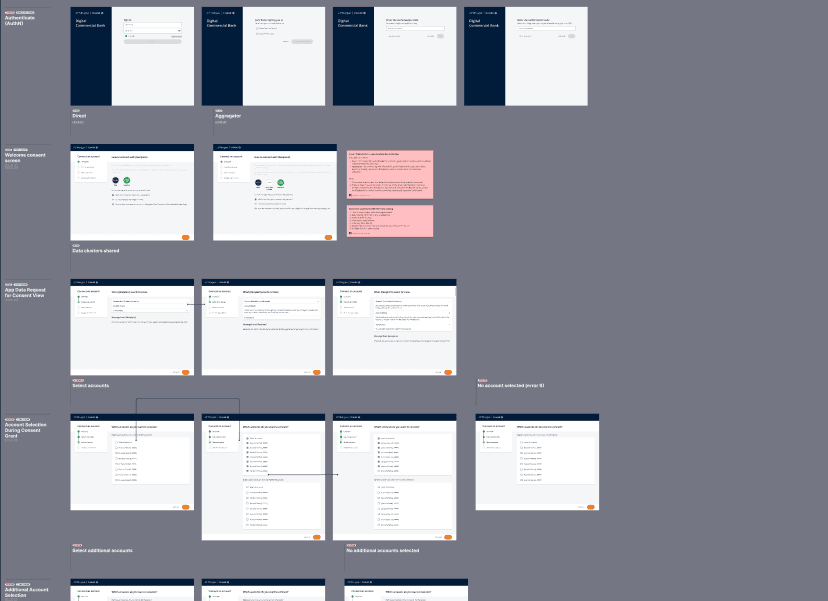
Consent onboarding: the initial flow for clients to discover, authenticate, and connect their external financial institutions to the platform
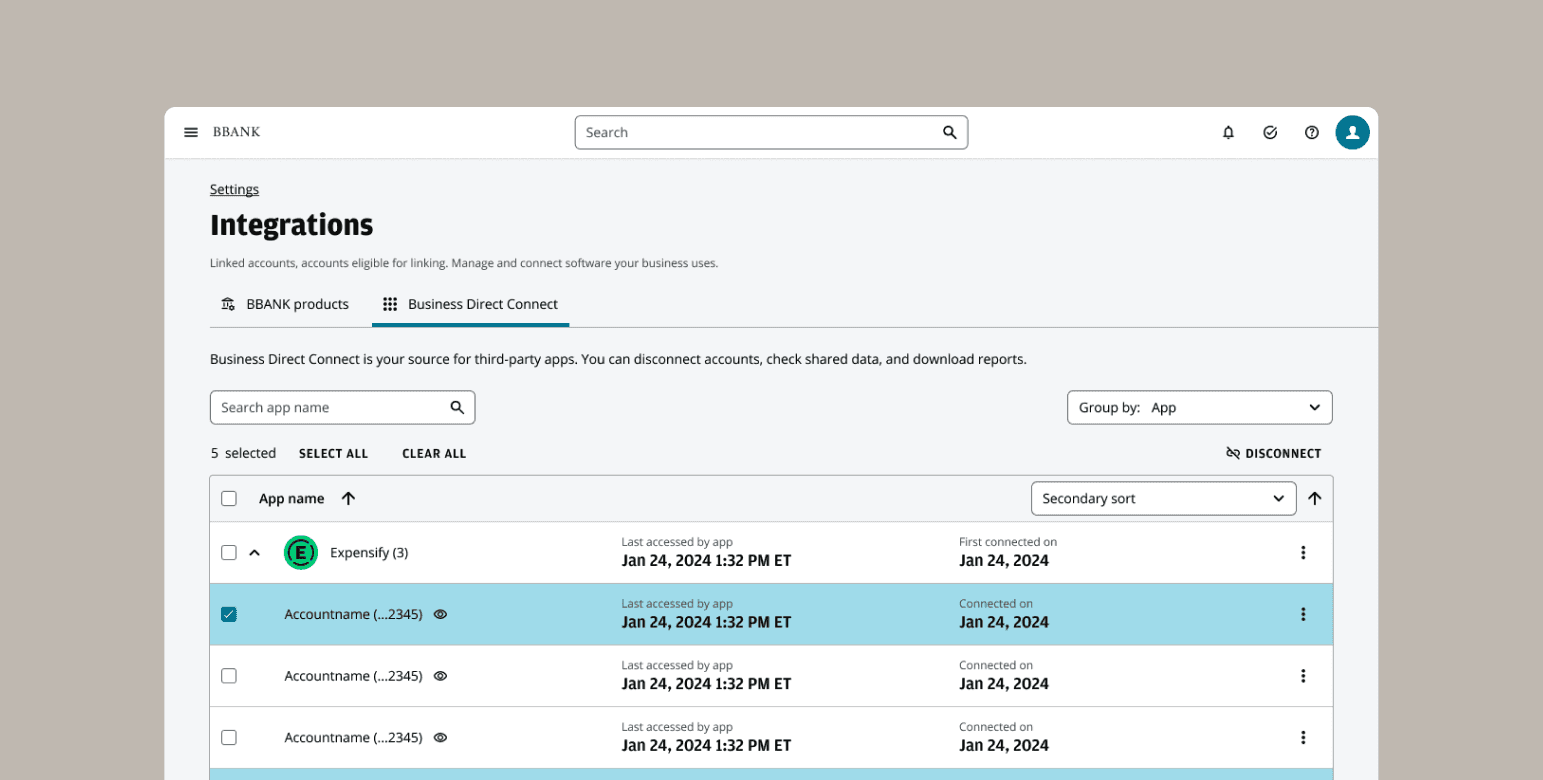
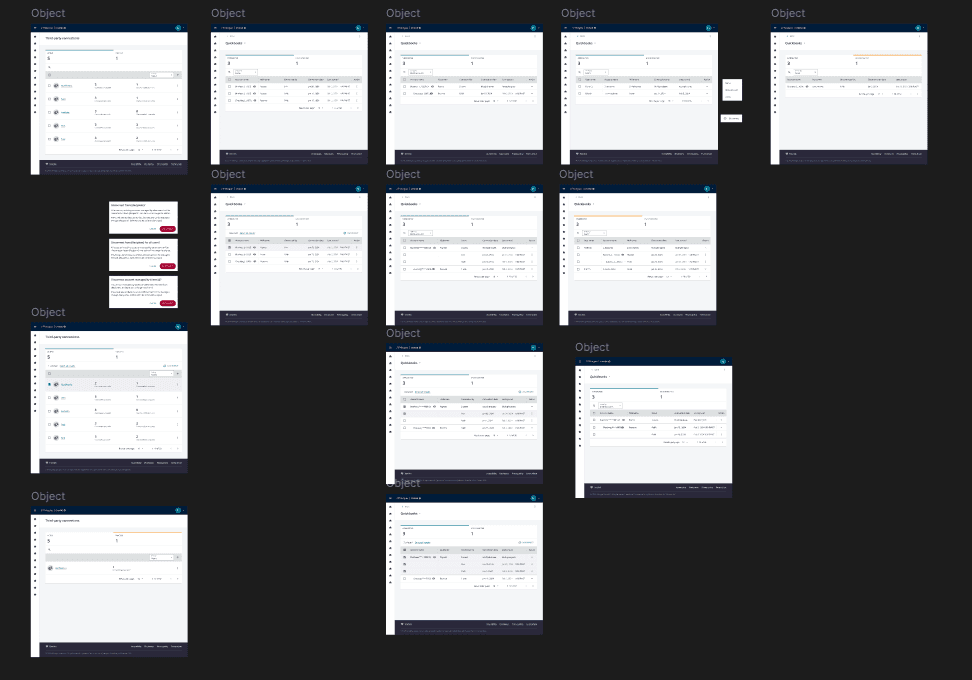
Consent management: the ongoing experience where clients could view, manage, and control which institutions they were linked to
We moved iteratively - designing initial flows, testing with users, incorporating feedback, and validating again before moving to high fidelity. This two-round validation approach ensured decisions were grounded in real user behavior, not assumptions.
We delivered a fully designed, developer-ready end-to-end FDX integration experience across both workstreams.
Key design decisions that shaped the outcome:
Onboarding as a guided flow: structured consent onboarding as a step-by-step process that reduced cognitive load and made authentication with external institutions feel trustworthy and transparent
Management as a living dashboard: designed consent management to give clients a clear, persistent view of all connected institutions with straightforward controls to modify or revoke access
QA partnership with engineering: stayed closely involved through development and QA, ensuring the shipped experience matched design intent at every interaction
Consent onboarding workflow
Consent management workflow
For the first time, Innovation Economy clients could connect and exchange financial data from external institutions directly within the banking platform - unlocking workflows that were previously impossible. The FDX integration became a foundational capability of the platform, embedded as a critical step in the client onboarding journey.
A project of this scope - spanning 1.5 years, two major workstreams, and a highly regulated financial context - demanded as much systems thinking as it did craft. Mapping the full journey before designing anything proved essential; it reframed the FDX integration from a feature request into a platform-critical experience. Staying involved through QA reinforced something worth carrying forward: design doesn't end at handoff - the gap between intended and shipped experience is where trust is won or lost.