Plan Forward
A dental practice management software company looking to invest in a strong design foundation
A dental practice management software company looking to invest in a strong design foundation
YEAR
2025
TIMELINE
1.5 years
ROLE
Lead product designer
DELIVERABLES
Product design · Design systems
TEAM
2 PMs, 2 designers, 3 engineers, 2 SMEs
Sole lead designer on a 7-month engagement to redesign and scale Plan Forward, a dental practice management platform, from single-practice use to supporting large dental support organizations (DSOs) with multiple locations and user levels.
Plan Forward's platform was built for single dental practices, but the business needed to support DSOs operating across multiple locations, each with distinct roles and permissions. The platform had to scale without sacrificing usability.
"How might we make dental management easier, applicable to broader contexts yet specific to people's roles so practices can efficiently find gaps in their business?"
Working from client-supplied user research and SME interviews, four core issues emerged:
From this, we identified three distinct user types - the existing base plus two new personas - each requiring unique permissions, workflows, and navigation structures.
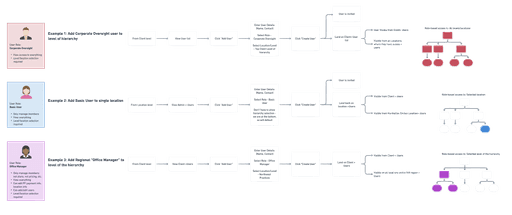
Based on the newly identified personas, we created a product map to be used as the backbone of the information architecture. We moved through three design phases:
Lo-fi blockframes: established the overall framework and gathered directional feedback from stakeholders
We delivered a fully redesigned platform with a scalable design system and hi-fidelity interactive prototypes across all three user types.
Three areas drove the most design thinking:
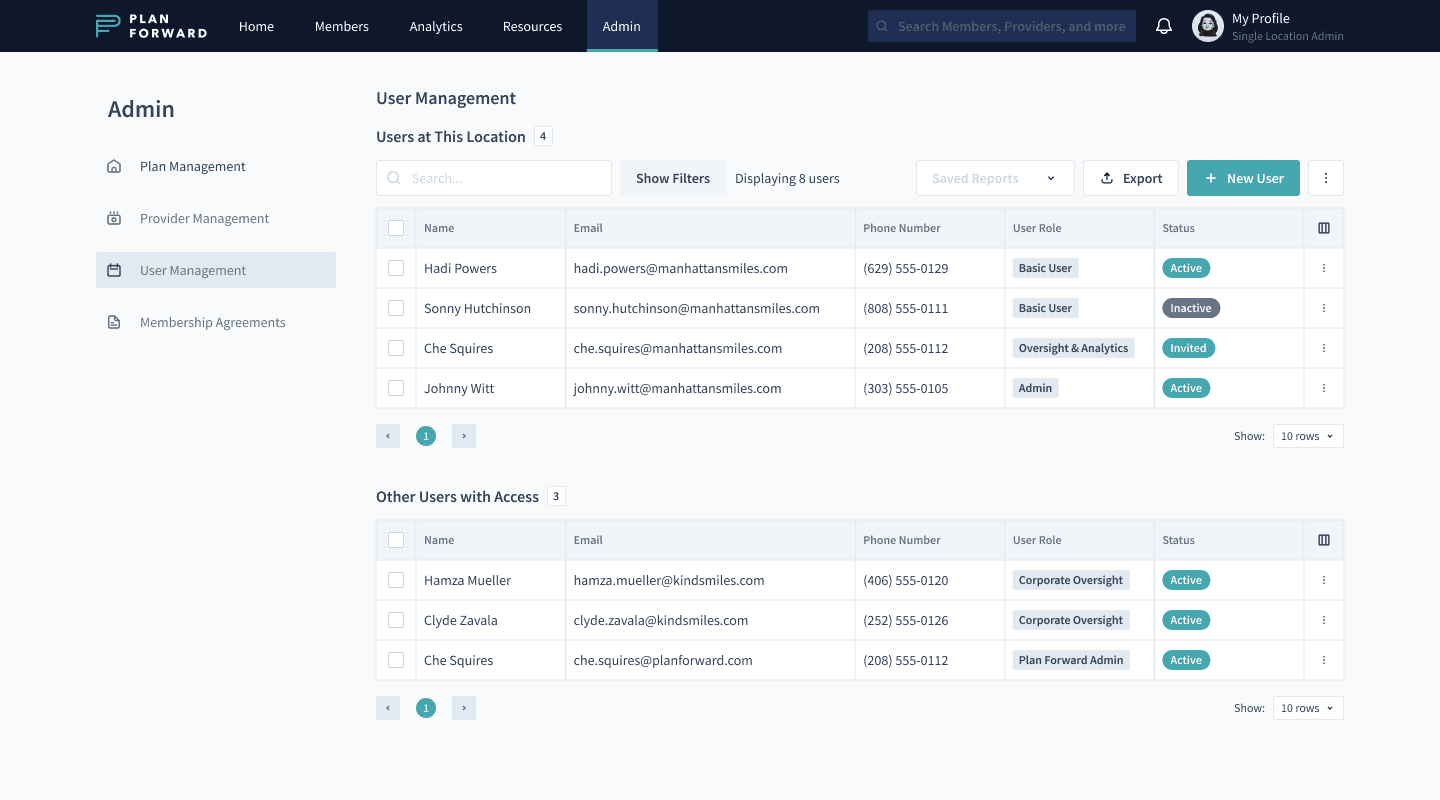
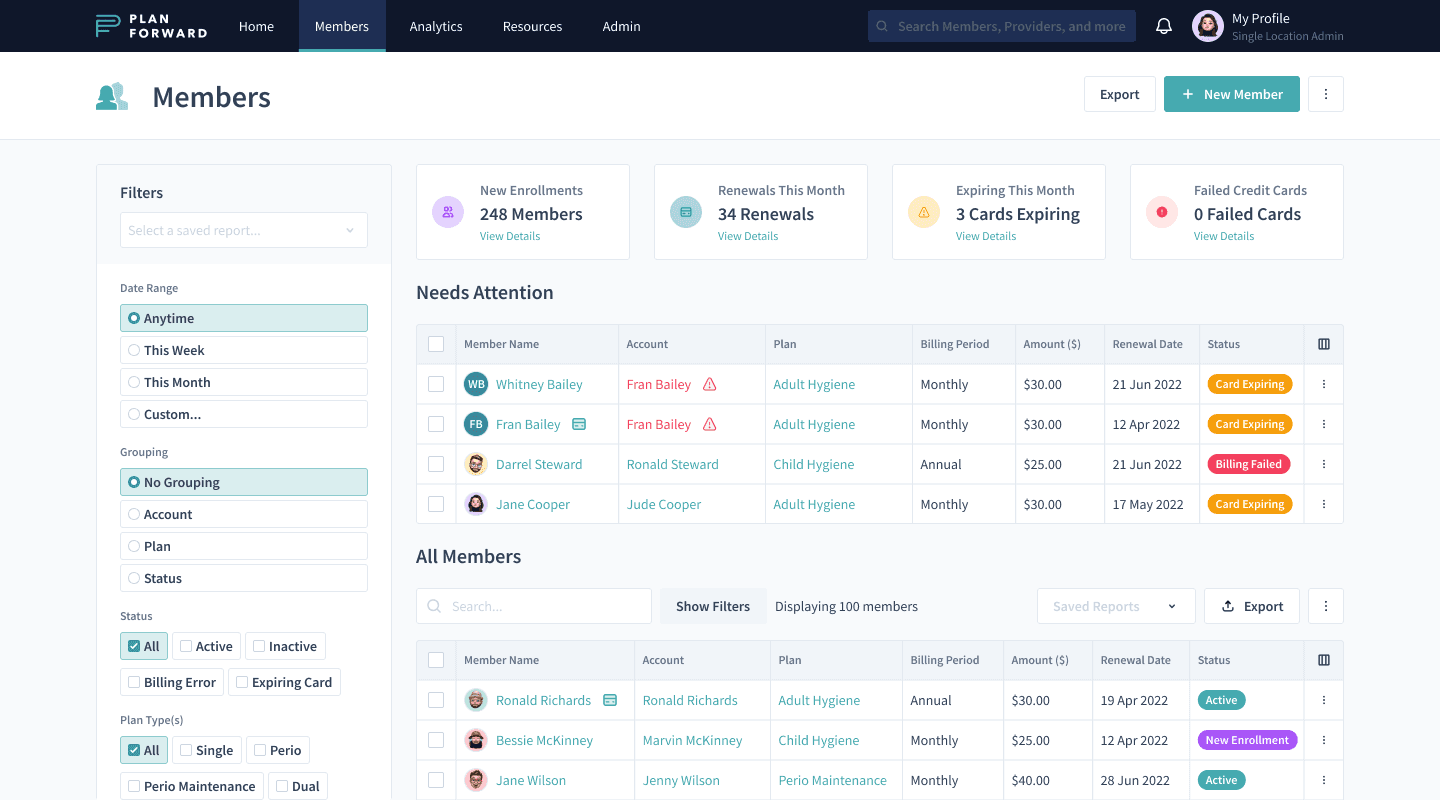
Role-based creation workflows: designed distinct workflows for each user level, updating the UX to meet industry standards while remaining flexible enough for all practice types
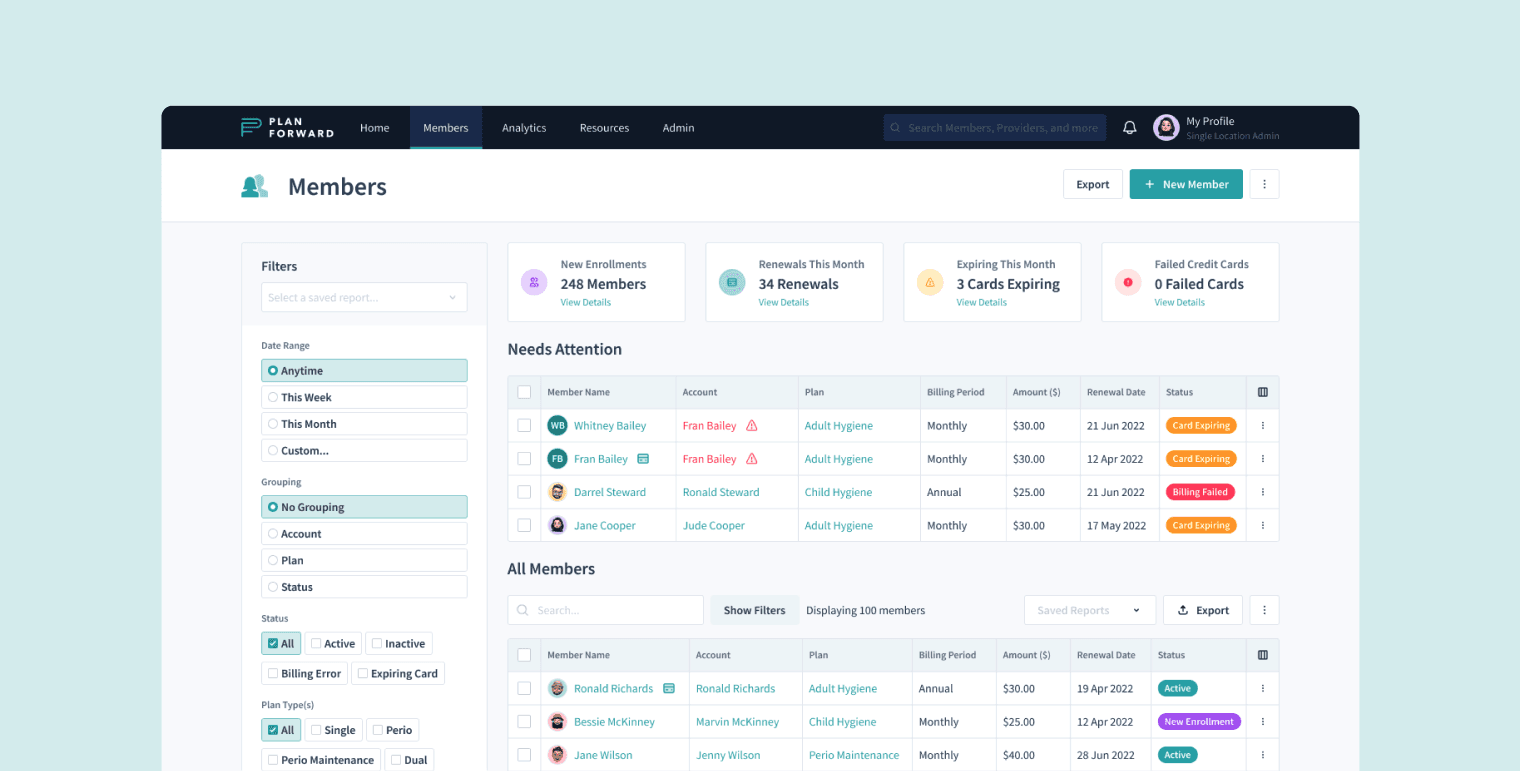
Analytics & reporting: introduced advanced filtering and data visualizations tailored to the specific data types users needed to identify gaps in their business performance
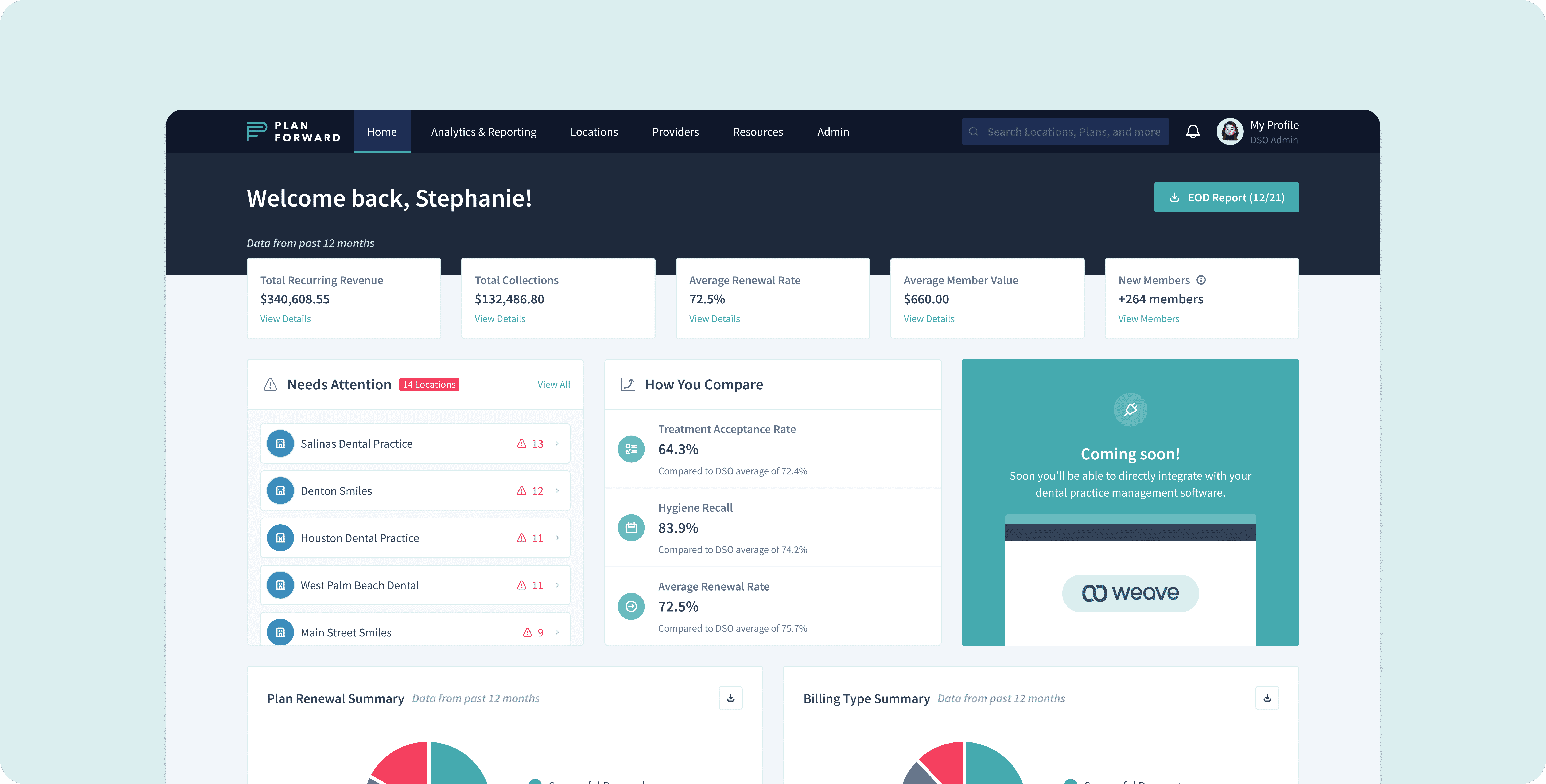
Dashboard experience: prioritized intuitiveness and return engagement by surfacing the top statistics and patient analytics summaries users flagged as most critical
All designs were delivered with detailed specifications for seamless developer handoff.
New client creation flow for Super User
New location creation flow for Multi-location User
New member creation flow for Single-location User
Plan Forward's platform grew by 125% following implementation. The company closed their first enterprise deal on the designs alone - before a single line of code was written. Beyond the metrics, the engagement established a long-term partnership dynamic, with stakeholders sharing ongoing successes well after the project closed.
This engagement sharpened two things: the ability to design for complexity without adding it, and the confidence to advocate for design decisions in a client-facing context. Defining an entirely new user architecture from scratch, while simultaneously rebuilding a design system, required constant prioritization and a strong point of view. Being seen as both a partner and a product expert, not just an executor, became the foundation of how the work landed.